Best IPTV UK – How to Judge a Provider Honestly
Best IPTV UK — How to Judge a Provider Honestly (When Every “Best” List Is an Advert)
You searched “best IPTV UK” and got ten lists that all say the same thing: we tested dozens of services, and the winner is the one paying us commission. Let’s not do that here.
This page won’t rank providers or name names. It gives you what the rigged lists never will: the criteria real buyers judge providers by, the testing method experienced users trust, and the red flags that tell you to walk away — so you can pick a provider yourself, and judge us by the same standards while you’re at it.
That last bit matters. If we’re asking for your money, we should be willing to be measured with the same ruler we hand you. Fair’s fair.
 Match-Night Testing Protocol • Real UK Infrastructure
Why you shouldn’t trust “best IPTV” lists
The “best IPTV UK” search results are dominated by what the community calls affiliate plants: template posts, mostly on Medium and throwaway blogs, all following the identical script — “I tested N services over X days, tracked uptime, buffering and EPG, and the winner is [brand], WhatsApp link here.” Same structure, same talking points, same number drop at the end. They’re evidence of the spam pattern, not review sources.
How the affiliate-plant template works
The playbook is always the same: a content-mill site publishes “Best IPTV UK 2026,” claims a rigorous testing process, ranks three to five named providers, and crowns a winner — always the provider whose affiliate or reseller link pays the author. Real users spot the tells instantly: the “reviews” never mention a single con, never name the device used, never describe a real match-night, and the comments are full of copy-pasted praise. A genuine two-year user always has at least one minor complaint — buffering once during a storm, an EPG logo missing, support slow on a Sunday. “BEST EVER! ZERO problems in 2 years!” is not a review; it’s an advert wearing a review’s clothes.
Why Trustpilot scores don’t save you either
Review invitations typically fire at onboarding — when the customer feels best — not at renewal, when they discover the price doubled, or at month eight, when the panel shut down. A score built from day-one happiness tells you nothing about month-six reliability. Treat star ratings as a vibe check on the sales process, not a measure of the service.
How to spot a genuine review vs a fake one
The community’s tells, worth memorising. Red flags: brand-new account praising one provider; identical praise text across threads (“Zero buffering till now impressed” repeated verbatim is a real example from Facebook groups); referral links; “BEST EVER! ZERO problems in 2 years!”; comments that pivot to DMs when you ask questions. Green flags: year-old account with varied history; specific pros and cons; names the device used; technical specifics (Xtream vs M3U, app compatibility); follow-up comments weeks later. Real users argue; plants disappear.
The practical takeaway: use communities as a warning system, not a shopping list. Read complaint threads, not recommendation threads. The reliable consensus is about method — how to test — not brands.
What do real buyers actually judge a provider by?
Strip out the spam and the same criteria come up again and again in buyer discussions, roughly in order of how often they’re mentioned:
Does it hold up during live sport?
This is the big one, and it dwarfs everything else — users don’t cancel over price, they cancel over buffering. The near-universal verdict: a Tuesday-afternoon channel zap tells you nothing; Saturday at 3pm tells you everything. Champions League nights, PPV fight nights, the Saturday 3pm surge — maximum server load, and the only test that reveals real infrastructure versus an overloaded panel. Any provider worth your money expects you to test them during a live match. If they’d rather you didn’t, that’s your answer.
 Peak Load Verification • Dual Cluster Redundancy
Is the EPG accurate and complete — with catch-up included?
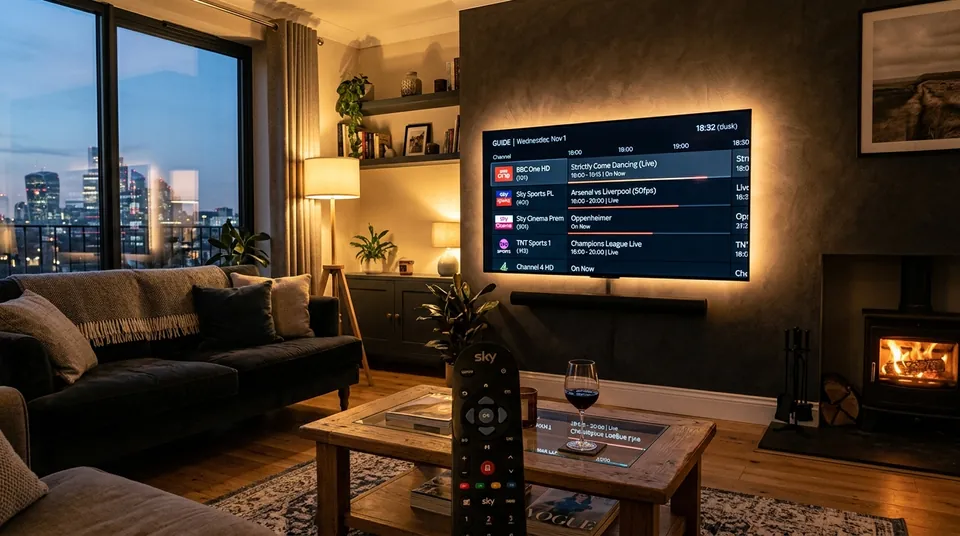
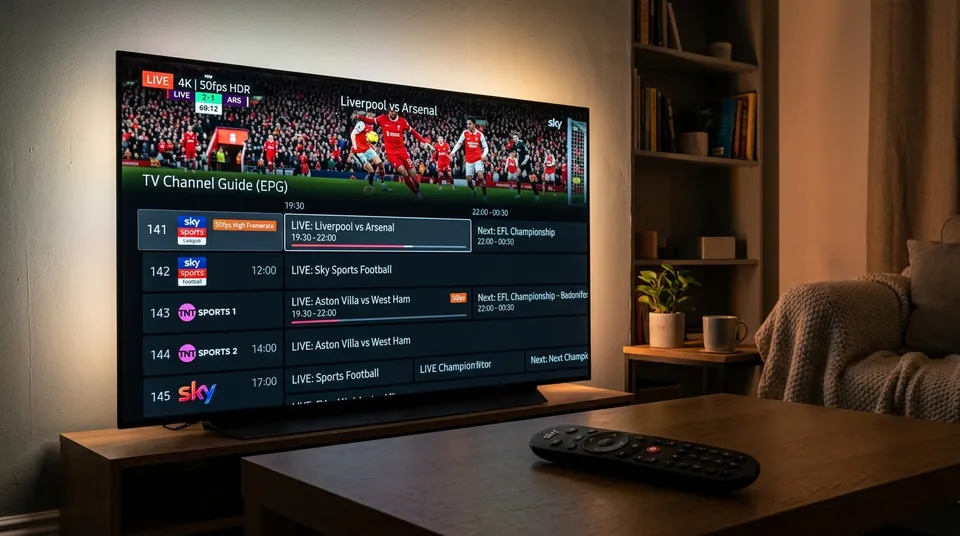
The EPG is treated as a signal of real infrastructure: correct listings, channel logos, descriptions, and 7-day catch-up hooked in means somebody maintains the service; a broken or half-empty guide means nobody does. Two checks — does the guide still hold up after six months, and is catch-up included on your plan rather than gated behind a pricier tier? Test both during the trial: scroll back to a missed match and confirm it plays.
Is the VOD library actually fresh?
Don’t trust the title count — trust the update date. The buyer tip that circulates in forums: during a trial, search for ten films and shows you actually want instead of admiring the “60,000+ titles” headline. Are new releases landing within days? Are series current season-by-season, or stuck two seasons back? A huge library untouched in months is a museum, not a service — VOD freshness tells you whether the provider is still investing in what you’re paying for.
 Independent Player Apps • Xtream Codes Sync
How fast does support reply — before you’ve paid?
“Message their support before you buy. How fast do they respond? Do they actually answer your question?” The pre-sale support test predicts the post-sale experience almost perfectly: WhatsApp or live-chat replies in minutes, from a human who answers the question asked — green flag. Silence, bot-only replies, or answers that ignore what you wrote — red flag. Bad providers ghost you after payment, so test the ghosting before payment, when it costs nothing.
What does the trial actually include?
The community-standard trial is 24–36 hours (a week is generous). What matters is the terms: a confident provider gives you the full channel list, full VOD, working EPG — not a watered-down demo bouquet. No card required is the mark of a provider that expects you to stay because the service is good, not because cancelling is hard. Paid trials of a pound or two exist and are accepted — but a card required for a “free” trial, with auto-renewal in the fine print, is one of the clearest scam tells there is. No trial at all? The forums are blunt: any provider worth using offers a free trial. No exceptions.
What’s the renewal price — not the signup price?
This is the column every comparison hides. Cheap intro pricing that quietly doubles in month two is the industry’s favourite trick — cheap first term, sharp renewal, friction on the way out. Experienced buyers check the renewal price first, and the standing advice is brutal and correct: if it isn’t published, assume it’s higher than the signup price. Ours is published on our honest pricing page, identical to the signup price. We’d rather you checked.
How many connections do you get — and are they solid?
Plans are commonly framed as 1, 2, or 4 simultaneous connections, and the honest framing resonates: one solid stream beats five flaky ones. A provider selling big connection counts on overloaded servers just sells you five ways to buffer at once. Buy for the screens that genuinely stream at the same time — extras can be added later over WhatsApp.
How can you pay — and what does that tell you?
Payment methods are a trust signal, not just a convenience. Traceable methods — card, PayPal Goods & Services — are a green flag because they give you chargeback protection if the provider vanishes. Crypto-only is the clearest “expects to be gone in six months” signal in the business: no chargebacks, no trail, no recourse. The community advice is specific: pay by card or PayPal for any provider you haven’t trusted for years. And check the auto-renewal question separately — a subscription that simply expires, no stored card, no retention-call maze, is the clean model. The hidden renewal is the industry’s favourite trick.
Does it handle UK match nights specifically?
UK-specific criteria worth knowing, reported by a UK tech community: real-time ISP blocking by BT, Sky, Virgin Media and TalkTalk during Premier League matches (dynamic firewalls that kick in as the match begins — some viewers use a VPN to route around it), true 60fps native feeds (cheap 30fps streams blur on football and F1), and Xtream Codes support so you’re not locked into a proprietary app. The blocking detail is user-reported rather than established fact — but the point stands: UK football at 3pm Saturday is the harshest test a service faces.
How fast does it zap?
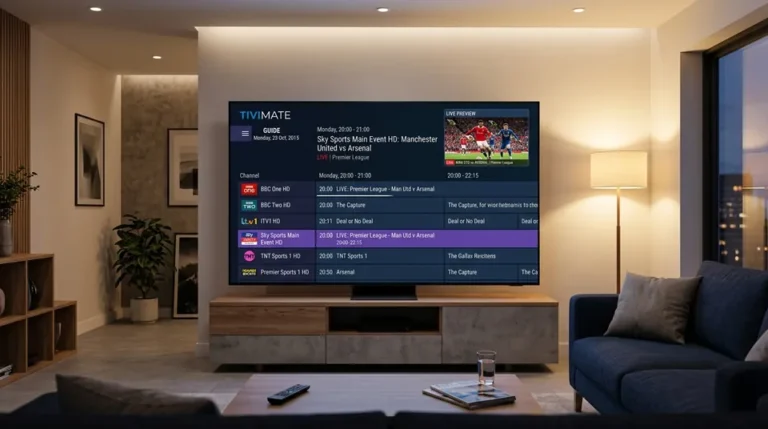
Channel-switching speed is a named test in buyer discussions — follow two matches at once and flip between them. Fast zapping is one of the main reasons experienced users praise TiviMate guide, and a service that takes five seconds to change channel will drive you mad on a busy sports evening even if the streams are stable. Thirty seconds of testing during the trial tells you a lot about server load.
| Evaluation Criterion | What Overloaded Sellers Offer | What Real UK Infrastructure Delivers | How to Verify in 60s |
|---|---|---|---|
| Match-Time Stability | Freezes at 3:05pm Saturday | Dual load-balanced 50fps feeds | Test during live Premier League |
| EPG & Catch-Up | Blank guides, paid catch-up addon | Full 7-day guide with native logos | Scroll back and replay yesterday’s match |
| VOD Freshness | Stale catalog from 2023 | New UK cinematic releases in 4K | Search for 5 current cinema releases |
| Pre-Sale Support | Automated bots or 18-hour delay | Real technician responds in <5 mins | Message WhatsApp with a setup question |
| Trial Transparency | Credit card required, auto-bills £60 | 24h free pass, zero payment details | Check if trial requires card details |
| Renewal Pricing | Hides renewal, doubles price in month 2 | Published renewal rates fixed for life | Review published terms before checkout |
| Stream Quality | Compressed 720p/30fps sports | Uncompressed 1080p50 & native 4K | Check ball motion on Sky Sports Main Event |
| Zapping Speed | 4–6 second black screen delay | Instant channel flip under 1 second | Zap between 5 channels sequentially |
How do you test a provider before you commit?
Here’s the community-consensus test protocol, in order — worth more than every “best IPTV” list ever written:
- Buy one month first. Never pay annually before testing.
- Run the trial during a live match. Saturday 3pm, a Champions League night, a PPV — whatever you actually watch. Peak-hour stability is the most important factor and the hardest to fake.
- Message support before you pay. Judge the speed and quality of the answer. Minutes from a human who answers the question: green flag.
- Check the EPG on day one and again later. A guide that changes daily is unusable; note whether quality drops after the trial window closes.
- Check the renewal terms before committing long. Unpublished renewal price means a higher renewal price.
- Test what you watch. Search the VOD for ten titles you actually want; verify 60fps on sport if offered.
- Test your home network too. Ethernet beats 2.4GHz Wi-Fi for 4K — most buffering is the home network, not the server. Our buffering help page fixes the usual causes in five minutes, so rule your own setup out before blaming the provider.
That protocol is also how we test ourselves — our editorial policy publishes the match-night method and the last-tested date, pass or fail.
The Saturday 3pm Match Protocol
When 3:00pm arrives on Saturday, the UK streaming audience surges by 400%. Under-provisioned servers begin dropping UDP packets, causing the classic 10-second freeze and audio loop. A provider operating dedicated high-bandwidth edge clusters with load balancing routes traffic smoothly through London and Manchester nodes without stutter.
What should IPTV cost in the UK?
The honest market band in UK discussion is £9.99–£19.99 a month, with 6- and 12-month plans bringing the monthly equivalent down. Annual plans around £5–7 a month equivalent are widely quoted as the smart buy — after testing.
Two lines to memorise:
- Under £5 a month is the scam floor. Repeatedly named across UK and US discussion: under £5/mo with no company info and no trial is “likely unlicensed” — the seller is either stacking hundreds of buyers onto one server (where your buffering comes from) or planning to vanish. At that price they’re cutting every corner: server capacity, CDN quality, EPG accuracy, weekend support.
- Far above the band is just reseller margin. Anything far above £19.99 isn’t a better service — it’s another reseller layer taking margin on the same upstream panel. And the line that should end the price debate: users rarely cancel over price. They cancel over buffering.
The full breakdown — including our renewal-price-never-moves promise — is on our pricing page. The deeper maths on why suspiciously cheap always buffers is in our cheap IPTV guide.
| Duration / Plan | Under-Market Scam Floor | Inflated Reseller Rate | Fair UK Market Standard | IPTVUK.store Guaranteed Rate |
|---|---|---|---|---|
| 1 Month Pass | £3.00–£4.99 (Severe Freezing) | £24.99–£29.99 | £12.00–£16.00 | £14.99 / month |
| 3 Months Pass | £9.99 (High Exit Risk) | £49.99–£59.99 | £30.00–£40.00 | £34.99 (£11.66/mo) |
| 6 Months Pass | £15.00 (Vanishes in month 2) | £79.99–£89.99 | £40.00–£55.00 | £44.99 (£7.50/mo) |
| 12 Months Annual Pass | £20.00–£30.00 (Ghost seller) | £119.99–£149.99 | £55.00–£75.00 | £59.99 (£5.00/mo) |
Provider vs reseller vs panel — what’s the difference?
You’ll see these three words everywhere in buyer discussions, and they’re worth understanding because they explain the price spread:
- A provider is the brand you buy from — the name on the site, the WhatsApp thread, the support replies.
- A reseller sells access bought wholesale from a supplier. Most of the “providers” you’ll encounter are resellers; there’s nothing inherently wrong with that.
- The panel is the web dashboard the upstream supplier gives resellers to create and manage accounts — the actual infrastructure. Resellers buy credits (wholesale tokens, roughly a month of service each) and generate lines: your subscription credentials, the M3U or Xtream Codes login.
Why it matters: the same panel can sit behind five different “brands” at five different prices. That’s why far-above-band pricing is usually just margin, and why under-£5 pricing means the reseller is overselling capacity or about to disappear. Judge the service in front of you — with the match-night test — not the label on the tin. Our provider comparison framework goes deeper on comparing seller types instead of brand names.
Why Server Infrastructure Separates True Hosts from Flippers
A reseller without direct server management cannot adjust bitrates, add backup sports feeds, or reroute around UK broadband filters. When you choose a provider with dedicated panel administration and server engineers, technical inquiries are answered directly, and streams are actively monitored during Premier League kick-offs.
Red flags that mean “walk away”
The scam warnings users repeat, condensed. Any one of these is enough:
- “Lifetime” subscriptions for a one-off fee. Near-universal red flag — the service disappears, or the panel gets shut down, and there’s no one to refund you.
- No trial, or a vague “contact us” with no terms. Any provider worth using offers a free trial. No exceptions.
- Crypto-only payments. The clearest “expects to be gone in six months” signal there is.
- Card required for a “free” trial. The auto-renewal is hiding in the fine print. It always is.
- “8K” claims. Impossible numbers — 8K, 100,000 channels, 100% uptime. The source feeds for true 8K don’t exist and your broadband couldn’t carry them. We sell 4K and say so.
- 100,000+ channel claims. Counting dead links and duplicate regional feeds. Ten thousand working channels beats a hundred thousand broken ones, every time.
- No company info, no terms, no refund policy, Gmail-only contact. A real business publishes real policies.
- Sports behind paid add-ons. PPV included is the norm for a serious service; channels held hostage for extra fees is a shakedown.
- No working EPG during the trial. If the guide is broken when they’re trying to impress you, imagine month four.
- Brand-new domain, zero track record, support that ghosts after payment. The disappear-after-payment pattern is well documented: access dies weeks into a 12-month plan, then you’re asked to pay again.
How to judge us by the same checks
We’d rather you ran the protocol on us than took our word for anything here. Take the 24-hour free trial — full channels, full VOD, working EPG, no card. Message our WhatsApp with a question first and time the reply. Run it during a live match. Check the renewal price on our see the plans. Read our refund policy before you pay. Compare what’s actually included against the criteria above.
If we fail any check on this page, don’t buy from us. The checks are the point.
Best IPTV UK FAQs
What is the best IPTV provider in the UK?
There isn’t a single honest answer — anyone giving you one named “winner” is selling something. The best provider for you passes the match-night test on your broadband, answers support messages in minutes, publishes its renewal price, and offers a proper free trial. Judge candidates with the criteria on this page.
How can I tell if an IPTV review is fake?
Look for the tells: brand-new accounts praising one provider, identical praise text across threads, referral links, “zero problems in 2 years” with no cons mentioned, and comments that pivot to DMs. Genuine reviews name the device used, mention specific pros and cons, and the reviewer sticks around to answer questions. Read complaint threads, not recommendation threads.
What should I test during an IPTV free trial?
Test it during a live match — Saturday 3pm or a Champions League night. Check the EPG works and stays accurate, search the VOD for ten titles you actually want, flip between channels to test zap speed, and message support with a question to test response time. A Tuesday-afternoon channel zap tells you nothing.
How much should IPTV cost per month in the UK?
£9.99–£19.99 a month is the honest band. Under £5 a month is the widely recognised scam floor — overloaded servers, buffering during the matches you bought it for. Annual plans around £5–7 a month equivalent are the smart buy, but only after a month of testing. Always check the renewal price, not just the signup price.
Is a cheap IPTV subscription worth it?
Cheap-monthly (under £5) is almost always a trap — the maths doesn’t work unless the seller is overselling server capacity. Cheap-annual from a provider that passed your match-night test is the genuine bargain. Our cheap IPTV guide breaks down the panel economics.
Do I need a VPN for IPTV in the UK?
No — the service works fine without one. Some viewers use a VPN anyway because UK broadband providers have been reported to throttle streaming during live Premier League matches. That’s a network issue on their end; a VPN routes around it. Entirely your call.
What’s the difference between a provider, a reseller and a panel?
The provider is the brand you buy from; a reseller sells access bought wholesale from a supplier (most “providers” are resellers); the panel is the supplier’s dashboard — the actual infrastructure. The same panel can sit behind several brands at different prices, which is why you judge the service with the match-night test rather than the label.
Can I get a free IPTV trial in the UK without a credit card?
Yes — any provider worth using offers one. Ours is 24 hours, full channels and VOD, no card, credentials over WhatsApp in minutes. If a “free” trial asks for your card details, walk away.
Run the test yourself — free for 24 hours
Every claim on this page is checkable, and the checks are free. Take the 24-hour trial — full channels, full VOD, working EPG, no card — and run it during a live match. Time our WhatsApp replies. Check the renewal price. Then decide.
Demand the Match-Night Test on WhatsApp
Start my free 24-hour trial on WhatsApp — credentials in minutes, no card, no commitment. If we don’t hold up at 3pm on Saturday, you’ll know by half time.
Claim Free TrialMore straight-talking guides like this on our IPTV blog — or start from the IPTV UK main page for the service itself.